

If you have a refrigerator leaking water, you need to act fast before it damages your kitchen floors or causes mold. Most pools of water under or inside your appliance come from drainage problems, condensation buildup, or failing water system components, such as a clogged drain line or a bad water valve. Fortunately, you can fix many of these issues yourself with basic tools, while others require a technician to handle safely. In this guide, you will learn how to find the source of the leak, apply quick fixes, and identify when it is time to call a professional appliance repair technician.
Quick Table for Refrigerator Leak Diagnosis
Identifying the physical location of the water helps you pinpoint the failing component before property damage or electrical hazards escalate. This reference matrix maps out the most common puddle locations, their likely sources, and how severe the issue is for your home:
| Puddle Location | Most Likely Culprit | Mechanical Subsystem | Technical Severity | Inside: Beneath the crisper drawers | Clogged Defrost Drain | Condensate Drainage (Unpressurized) | Low (DIY Friendly) | Outside: Back of the unit, pooling on the floor | Cracked Drain Pan or Loose Fitting | Condensate Loop or Supply Lines | Medium | Outside: Front or bottom-front of the unit | Failing Door Gasket (Condensation) | Environmental Seal / Insulation | Low | Inside/Outside: Dripping from the dispenser cavity | Failing Water Inlet Valve or Loose Connection | Potable Water Supply (Pressurized) | High (Expert Required) |
The Root Causes of a Refrigerator Leak
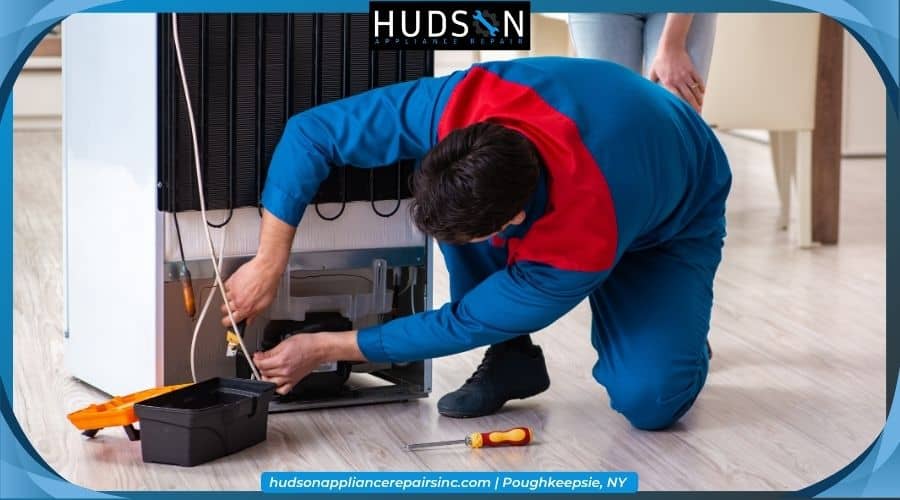
Finding a puddle around your appliance means one of its fluid or condensation systems has broken down. You can trace the source of the water by checking these common problem areas:
- Clogged Defrost Drain: Food particles or ice block the small drain hole inside your freezer, which causes melted frost to overflow and pool under your crisper drawers.
- Cracked Drain Pan: The plastic drain pan underneath the refrigerator can crack, shift out of position, or overflow due to excess condensation buildup.
- Bad Water Inlet Valve: The electronic valve at the back of the unit develops a crack or a loose seal, which creates a steady leak from your household water supply line.
- Worn Door Gaskets: Torn or dirty rubber door seals let warm, humid air into the fridge, which creates excessive condensation that overloads the drainage system.
- Cracked Water Filter Housing: Small structural cracks in the plastic filter head assembly or the filter cartridge itself will cause water to drip down the inside back wall of the fresh food compartment.
- Frozen Water Reservoir: If the fresh water reservoir freezes, it can crack the internal plastic tubing or storage tank and cause water to leak into the fresh food section.
Quick DIY Fixes for a Leaking Fridge
You can resolve many common drainage and seal issues on your own without spending a lot of money. Try these straightforward troubleshooting steps to stop the water from pooling:
Note: Before inspecting any internal parts or water connections, unplug the refrigerator and shut off the water supply valve.
- Flush the Drain Line: Pour warm water mixed with a little vinegar down the freezer drain hole using a turkey baster to clear out ice and debris.
- Clean the Door Seals: Wipe down the rubber gaskets with warm water and mild soap to remove sticky food residue that prevents the door from closing tightly.
- Level the Refrigerator Front Legs: Adjust the screw-in legs at the bottom front of the fridge so the unit tilts slightly backward, which helps water flow into the rear drain.
- Check the Water Line Connections: Tighten any loose plastic or braided metal nuts on the water line at the back of the refrigerator to stop active dripping.
- Reseat the Water Filter: Take out the water filter and twist it back into place to make sure the O-rings are perfectly aligned and not letting water bypass the seal. Also confirm it’s the manufacturer-approved filter model for your fridge — a generic or incompatible filter often won’t seat fully and can leak even when reinstalled correctly.
When to Call an Expert Appliance Technician
Certain refrigerator leaks involve high water pressure or complex electrical systems that are dangerous to handle without training. You should contact a professional repair service immediately if you notice any of these serious signs:
- Leaking Water Inlet Valve: Replacing a cracked pressurized valve requires specialized tools and OEM parts to prevent a sudden kitchen flood.
- Continuous Ice Maker Drips: Ongoing leaks inside the ice maker compartment often point to a failing water inlet valve, blocked fill tube, incorrect water pressure, or an issue inside the ice maker assembly.
- Water Near Electrical Components: Puddles forming near the compressor, wiring harnesses, or wall outlet present a severe risk of electrical shock or fire.
- Leaking and Cooling Issues: If your fridge leaks water and also stops cooling properly, the problem may involve the defrost system, airflow circulation, evaporator components, or another internal cooling issue that requires professional diagnosis.
- Internal Water Line Ruptures: Leaks buried inside the insulated cabinet walls or door panels cannot be accessed without special tools and diagnostic gear.
Protect Your Refrigerator from Water Leak Damage
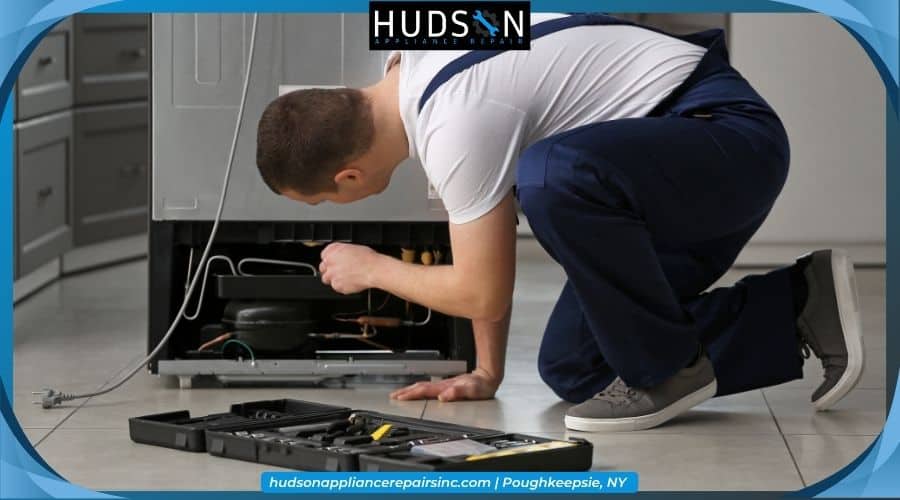
Taking care of a refrigerator leak right away saves you from expensive floor repairs and keeps your appliance running efficiently for years. Regularly cleaning your door seals, vacuuming the dust off your condenser coils, and changing your water filter every six months will prevent these drainage failures from happening in the first place.
If a basic flush of the drain line does not stop the water, turn off the water supply valve. Hudson Appliance Repair is a full-service home appliance repair company serving the Poughkeepsie, NY area, specializing in comprehensive refrigerator, oven, dishwasher, and washer and dryer repair for local homeowners.
Stop the damage. Schedule your refrigerator repair today.
Frequently Asked Questions
Why is there water on the floor in front of my refrigerator?
This puddle usually happens when the defrost drain is completely blocked, forcing melted frost water to overflow out of the bottom of the freezer door or under the crisper drawers and out onto the kitchen floor.
How do I unclog a refrigerator defrost drain?
You can clear the clog by locating the drain hole at the back of the freezer or fresh food section and flushing it with warm water and a turkey baster until you hear it empty into the pan below.
Why is water leaking from my refrigerator’s water dispenser?
A dripping dispenser is usually caused by air trapped in the water line after a filter change, or a failing water inlet valve that cannot seal properly against your home’s water pressure.
Can a bad door seal cause a refrigerator to leak?
Yes. When a door seal is torn or warped, warm and humid room air leaks inside, creating rapid condensation that quickly overloads the drainage system and spills onto your floor.
How do I find the source of a fridge leak?
You can trace a leak by looking inside the unit for water under the crisper drawers, or pulling the refrigerator away from the wall to inspect the water valve, line fittings, and drain pan at the back.