
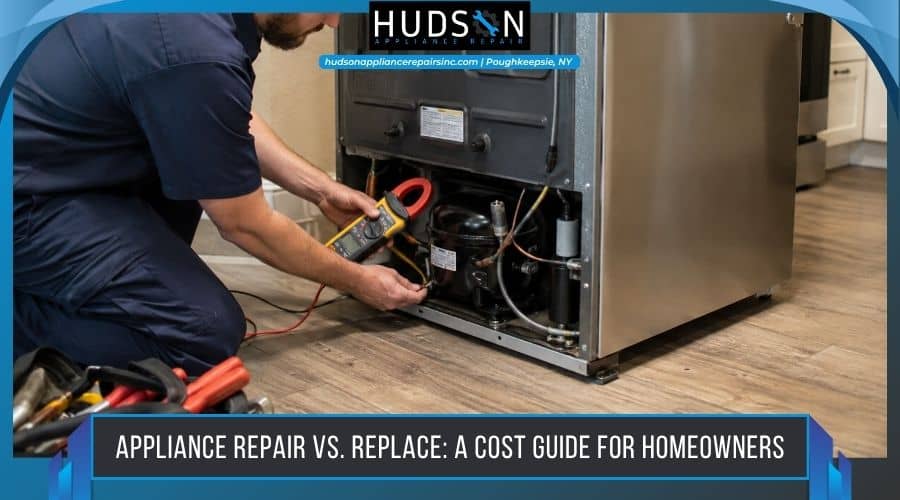
When a refrigerator stops cooling or a washer won’t drain, you usually have a repair quote in one hand and a store ad in the other. Two numbers settle most appliance repair vs. replace decisions: the unit’s age and the repair cost next to a new model. A third factor, whether this is the first breakdown or one of several, can tip a close call. A trained technician offering household appliance repair can tell you what’s actually broken. The final call is yours, and it should rest on numbers, rather than a gut feeling.
The 50 Percent Rule for Appliance Repair Decisions
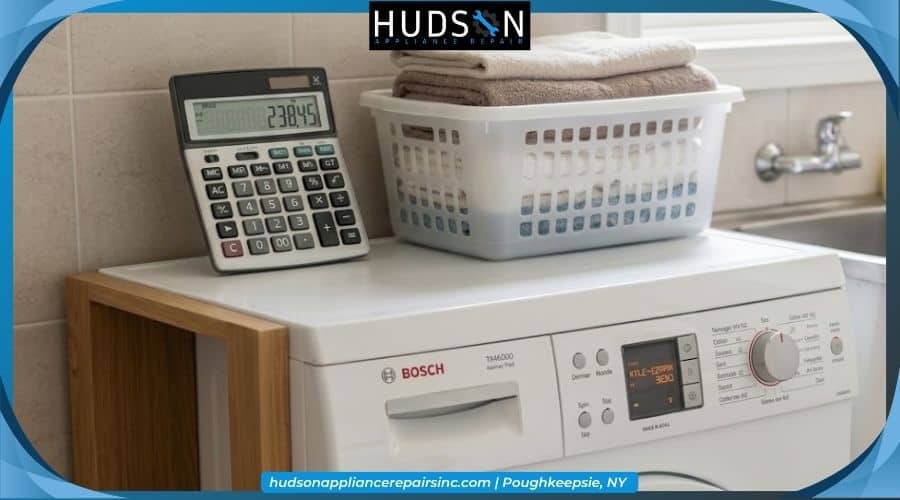
The simplest test is to compare the repair price with the cost of a comparable new appliance. Consumer Reports’ repair research advises against spending more than 50 percent of a new product’s price to fix an old one. To run the numbers, divide the repair quote by the price of a similar new model. A result under half points toward repair, and anything over it points toward buying new.
Age matters just as much as price. Consumer Reports gives a washer example that shows why. If you paid $650 for a washer seven years ago and run seven loads a week, a new machine makes sense. If the washer is three years old and cost $1,000, a repair may be the better financial choice.
How Long Major Home Appliances Usually Last
Every appliance type wears out on its own timeline, and knowing that timeline tells you how much life a repair can realistically buy. The ranges below come from the life expectancy chart for homes published by the International Association of Certified Home Inspectors (InterNACHI):
| Appliance | Estimated Lifespan |
|---|---|
| Dishwasher | About 9 years |
| Refrigerator | 9 to 13 years |
| Washing Machine | 5 to 15 years |
| Clothes Dryer | About 13 years |
| Electric Range | 13 to 15 years |
| Gas Range | 15 to 17 years |
| Gas Oven | 10 to 18 years |
| Microwave Oven | About 9 years |
InterNACHI notes that lifespan depends heavily on how much use an appliance gets. Treat these numbers as a guide rather than a deadline.
Four Questions to Ask Before You Decide on an Appliance
A good decision takes more than one number. Run through these four checks in order, and the right choice usually becomes clear by the last one.
1.How Old Is the Appliance Compared to Its Lifespan?
Start with the purchase date. If you don’t have the receipt, the model and serial number are printed on a label, and the manufacturer’s customer support can help you work out the build date. An appliance near or past the top of its lifespan range has less time left to earn back the cost of a repair.
2.What Does the Appliance Repair Cost Next to a New Model?
Get a repair quote that lists parts and labor separately. Then price a comparable new model, not the cheapest one on the floor. Divide the quote by the new price, and you have your 50 percent answer.
3.Has This Appliance Needed Repairs Before?
Keep your old invoices and add them up. A single repair is one thing, but several repairs on the same unit start to eat into what a new appliance would have cost. Counting the total helps you see whether you are fixing one worn part or paying for a slow decline.
4.What Will a New Appliance Really Cost You?
The price tag is only part of it. Delivery and installation add to the bill, and someone has to haul away the old unit. Built-in models also need to fit your existing space. On the other side, ENERGY STAR reports that an old refrigerator uses about 20 percent more energy than a model that has earned its certification, so running costs belong in the math too.
Appliance Repairs That Usually Make Sense
Many breakdowns come down to one worn part rather than a failing machine. Based on Consumer Reports’ appliance repair data and the repair odds it reports for each appliance, these are the fixes where repair usually makes sense:
- A ripped refrigerator door gasket is a cheap fix, and Consumer Reports calls replacing one a fairly simple DIY job.
- Fridge evaporator fan motors and thermostats break often, and on a refrigerator under 10 years old, repair is usually the more economical choice. Knowing why a refrigerator quits working helps you tell a small fix from a big one.
- Range repairs tend to be simple and inexpensive, so a failed oven igniter or bake element is usually worth fixing.
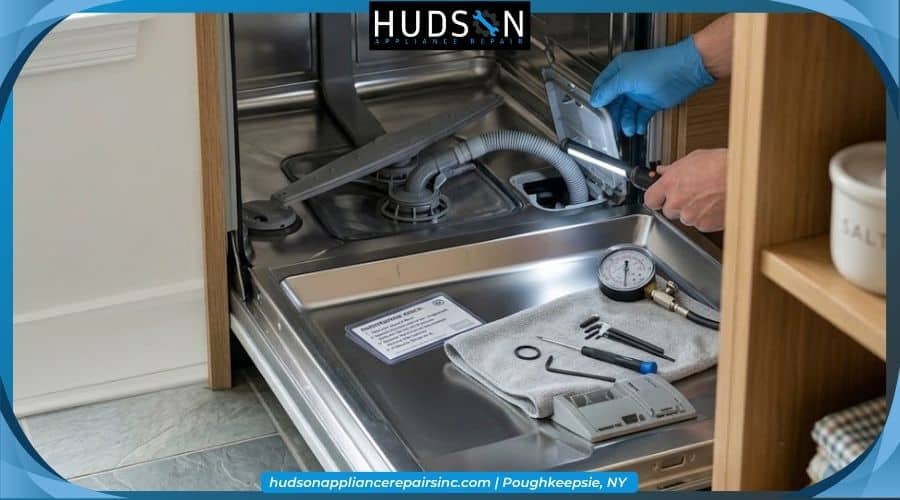
- A dishwasher that won’t drain may only have a kinked or clogged hose. Checking the dishwasher drain hose and straightening or flushing it is often the whole fix.
- Washer lid switches and drain pumps fail more often than most parts, and on a newer machine a repair may be the better financial choice.
- Dryer thermal fuses and heating elements are common failures too. Each is a single-part fix worth running through the 50 percent test.
Before you pick up a screwdriver, read up on which fixes are safe to try yourself.
Signs Replacing the Appliance Is the Smarter Decision
Some failures cost so much that a repair rarely pays off on an older unit. If your technician points to one of these problems, start pricing new models:
- A failed refrigerator compressor. Consumer Reports quotes a repair pro who calls this repair extremely costly, since it means removing the refrigerant under strict federal guidelines, cutting out the old unit, and recharging the system. Fridges under 10 years old are usually worth fixing, so an older fridge with a failed compressor is a strong candidate for replacement.
- Washer control boards and motors are the most expensive washer parts to replace, according to a repair pro quoted by Consumer Reports.
- Dishwashers lose value fast, and Consumer Reports says its data typically leans toward replacement, in part because professional repairs can be surprisingly expensive. A failing dishwasher on an older unit is a good time to shop.
- When repair bills keep stacking up on the same unit, add them together and compare the total with a new model’s price.
Tub bearings sit in a gray zone. Replacing worn washer drum bearings means taking apart the entire machine, so the labor adds up. That makes the repair easier to justify on a newer washer than on one near the end of its lifespan.
Repair or Replace by Appliance Type
Each appliance has its own mix of common parts, costly failures, and repair odds. This quick comparison pulls together what Consumer Reports’ data suggests for each one:
| Appliance | Parts That Commonly Break | Costliest Failure | What Consumer Reports’ Data Suggests |
|---|---|---|---|
| Refrigerator | Ice maker, evaporator fan motor, thermostat | Compressor | Usually worth fixing if under 10 years old |
| Range or Oven | Ignition system, bake element, temperature sensor | n/a | Data tends to point toward repair |
| Dishwasher | Inlet valve, wash arm, drain pump, circulation pump | Pump damage | Data typically leans toward replacement |
| Washing Machine | Door or lid switch, drain pump, tub bearings | Control board, motor | Depends on age, use, and what you paid |
| Clothes Dryer | Thermal fuse, heating element, drum seal | n/a | Run the 50 percent rule on the quote |

What a Diagnosis Tells You Before You Spend Anything
A clear diagnosis turns a stressful breakdown into a simple choice between two known numbers. Our technicians diagnose and repair the major home appliances, so you can put the real repair price next to the cost of a new model before you spend anything. Tell us what’s broken and we’ll look at whether that stubborn washer or warm fridge still has good years left in it.
Hudson Appliance Repair is a locally owned repair company based in Poughkeepsie, NY. We fix home appliances and commercial equipment for households and businesses across Dutchess, Ulster, Orange, and Putnam counties. When a breakdown leaves you stuck between a repair quote and a new appliance, our technicians can find the actual problem so you can decide with real numbers.
Frequently Asked Questions
Is it worth repairing a 10-year-old refrigerator?
It depends on what failed. Consumer Reports’ research shows refrigerators under 10 years old are usually more economical to fix, and a torn door gasket is cheap at any age. A compressor failure on a fridge at or past 10 years is costly, so replacement often makes more sense.
What is the 50 percent rule for appliances?
The 50 percent rule says not to spend more than half the price of a comparable new appliance repairing an old one. Divide the repair quote by the new model’s price. A result under 50 percent usually favors repair, while anything above it usually favors buying a replacement.
Should I repair or replace a dishwasher that won’t drain?
Start with the drain hose. A kinked or clogged hose is a common cause of standing water, and straightening or flushing it is an easy fix. If the drain pump itself has failed on an older unit, lean toward replacing it, since Consumer Reports’ data on dishwashers typically favors replacement.
Is a diagnostic visit worth it if I might replace the appliance?
Usually, yes, because a diagnosis tells you whether the problem is a cheap part or a major failure. Without it, you could replace an appliance that only needed a small repair. A real quote also gives you the exact number you need to run the 50 percent rule.
Is an extended warranty worth buying on a new appliance?
Often it is not. Consumer Reports found that people with service contracts or extended warranties were no more satisfied with their repairs than people without them. Check the manufacturer’s warranty that comes with the appliance first, since Consumer Reports notes most washer warranties already cover the first year.