If your garbage disposal is jammed, turn it off and disconnect the power before you inspect it. A disposal that hums but does not spin often has an object blocking the rotating mechanism. This guide explains how to identify a mechanical jam, clear common blockages safely, reset the unit, and recognize problems that require professional service.
Never place your hand or fingers inside the grinding chamber. If the disposal leaks, sparks, smells burnt, repeatedly trips the breaker, or has damaged wiring, stop using it and arrange professional service.
Why Is My Garbage Disposal Humming but Not Spinning?
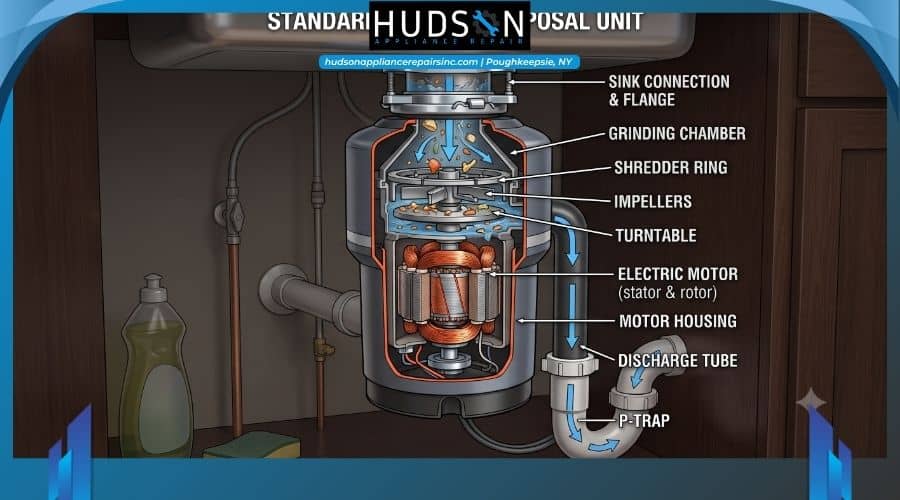
A garbage disposal that hums but does not spin usually has power reaching the motor, but the rotating mechanism cannot move. Turn off the unit immediately to reduce the risk of overheating the motor.
Most garbage disposals use an electric motor to rotate a turntable. Swivel impellers or lugs push food waste against a stationary grind ring, breaking it into smaller particles that can pass through the drain.
Hard objects, fibrous food, or other foreign materials can prevent the turntable from moving. The motor may continue trying to operate, which causes the humming sound. Similar warning signs can appear in other household appliances, so understanding the basics in our guide to appliance repair can help you recognize problems before they become more serious.
If the motor remains stalled, the overload protector may shut down the disposal to prevent excessive overheating. Continuing to switch the unit on without clearing the blockage can damage the motor.
Is the Garbage Disposal Jammed or Is the Drain Clogged?
A jammed garbage disposal and a clogged drain are different problems. A mechanical jam prevents the disposal’s rotating mechanism from moving, while a drain clog restricts water and waste from flowing through the plumbing.
Common signs of a mechanical jam include:
- The disposal hums but does not spin.
- The unit shuts off after running briefly.
- The reset button or overload protector trips.
- The internal mechanism will not rotate freely.
Common signs of a drain blockage include:
- Water drains slowly even when the disposal runs.
- Dirty water backs up into the sink.
- Water rises in the second basin of a double sink.
- The disposal runs normally, but the wastewater does not drain.
Identifying the correct problem matters because freeing a jam will not clear a blocked drain line.
How Do You Safely Fix a Jammed Garbage Disposal?
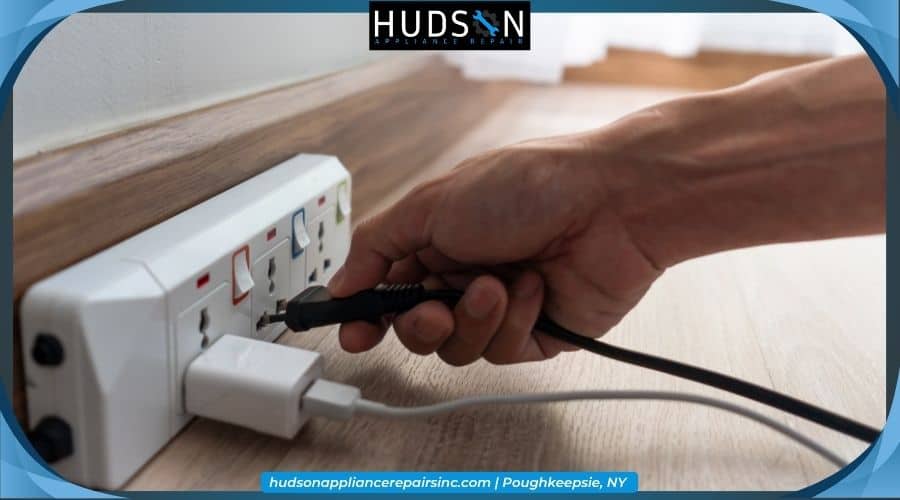
Turn off the disposal and completely disconnect its power before inspecting or attempting to free the rotating mechanism. Never depend only on the wall switch to prevent accidental operation.
Follow these steps to troubleshoot the jam safely.
- Turn off the disposal and disconnect the power. Unplug the unit if it has a power cord. If the disposal is hardwired, switch off the correct circuit breaker before working near the grinding chamber.
- Shine a flashlight into the disposal opening. Look for bones, glass, bottle caps, utensils, or other objects that may be blocking the mechanism.
- Remove visible objects with long-handled tongs or pliers. Never place your fingers or hands inside the disposal.
- Check the manufacturer’s instructions for the correct method to rotate the mechanism manually. Many models have a socket underneath the unit that accepts a manufacturer-supplied wrench or the correct size hex wrench. Other models use a different unjamming procedure.
- If your disposal has a bottom socket, insert the correct wrench and work it back and forth until the mechanism turns freely. Do not assume every model uses the same wrench size or procedure.
- Inspect the grinding chamber again with a flashlight. Remove any newly loosened objects with tongs or pliers.
- Allow the motor to cool if the overload protector has tripped.
- Press the reset button if your model has one and the manufacturer recommends this step. The location and reset procedure can vary between models.
- Restore power only after removing your tools and confirming that no one is near the disposal opening.
- Run cold water, switch on the disposal briefly, and listen for normal operation.
Follow the manufacturer’s instructions for fixing a jammed garbage disposal when troubleshooting an InSinkErator unit. Other brands and models may require different procedures.
What Should You Do if the Disposal Has No Hex Socket?
Check the owner’s manual or manufacturer’s instructions before attempting another method. Not every garbage disposal uses a bottom hex socket.
Some models require a manufacturer-supplied wrench, while others allow the turntable to be rotated using a different procedure. Using the wrong tool or forcing a component can damage the disposal.
Do not insert screwdrivers or other improvised tools into the grinding chamber unless the manufacturer specifically recommends that procedure.
Why Does the Garbage Disposal Keep Tripping the Reset Button?
A reset button that repeatedly trips may indicate an unresolved jam, an overheated motor, an electrical problem, or internal motor failure. Do not keep pressing the button and restarting the disposal without finding the cause.
The overload protector interrupts power when the motor draws excessive current or overheats. Before attempting a reset:
- Disconnect the power.
- Confirm that the rotating mechanism moves freely.
- Remove visible foreign objects.
- Allow the motor enough time to cool.
- Follow the reset instructions for your specific model.
If the reset button will not stay engaged after the unit cools and the jam has been cleared, stop troubleshooting and arrange professional service.
What Causes a Garbage Disposal to Jam?
Hard objects, fibrous food waste, expandable foods, and foreign materials can prevent the rotating mechanism from moving freely. Poor disposal habits can also lead to repeated jams and drain blockages.
Common problem materials include:
- Bones, fruit pits, and other hard objects
- Celery, corn husks, and other fibrous vegetables
- Large amounts of pasta, rice, and other foods that expand with water
- Potato peels and similar starchy waste
- Grease, fats, and oils that can contribute to drain blockages
- Glass, bottle caps, twist ties, utensils, and other foreign objects
Coffee grounds and eggshells may also contribute to drain buildup, especially when combined with grease or other waste.
Run cold water while grinding food waste and continue running the water briefly after the disposal finishes. Feed waste gradually instead of forcing large amounts into the unit at once.
Can You Use Chemical Drain Cleaner in a Garbage Disposal?
Chemical drain cleaners are not a proper solution for a mechanically jammed garbage disposal. They do not remove hard objects that prevent the turntable or impellers from moving.
Chemical products can also create an exposure risk if you later open the plumbing, remove the disposal, or work near standing water containing the cleaner.
If you already poured a chemical drain cleaner into the sink:
- Do not reach into the disposal.
- Do not add another chemical product.
- Avoid splashing the standing water.
- Follow the product label instructions.
- Tell the technician or plumber which product you used before service begins.
The EPA’s household hazardous waste guidance also explains why household hazardous products require proper handling and disposal.
When Should You Stop Troubleshooting a Jammed Garbage Disposal?
Stop troubleshooting when basic, manufacturer-approved steps do not restore normal operation. Repeatedly running a damaged or stalled disposal can worsen motor, electrical, or plumbing problems.
Arrange professional service if:
- The disposal still hums after the obstruction has been removed.
- The rotating mechanism will not move freely.
- The reset button repeatedly trips or will not stay engaged.
- The circuit breaker trips more than once.
- You notice sparks, smoke, damaged wiring, or a burning smell.
- Water leaks from the disposal housing or electrical connections.
- The motor makes unusual grinding noises after the jam is cleared.
- The unit remains completely unresponsive after you verify the power supply.
These symptoms can indicate motor failure, electrical faults, damaged seals, worn internal components, or other problems that require further diagnosis.
Get Professional Help When a Garbage Disposal Jam Persists
A homeowner can often clear a simple garbage disposal jam by disconnecting the power, removing visible objects, following the manufacturer’s unjamming procedure, and resetting the overload protector when appropriate. Stop DIY troubleshooting if the disposal continues humming, leaking, overheating, tripping the breaker, or refusing to operate normally.
Hudson Appliance Repair is a full-service home appliance repair company serving the Poughkeepsie, NY area, specializing in comprehensive refrigerator, oven, dishwasher, and washer and dryer repair for local homeowners.
Contact our technicians for professional appliance repair when a garbage disposal problem requires diagnosis beyond safe homeowner troubleshooting.
Frequently Asked Questions
Why is my garbage disposal humming but not spinning?
A humming disposal usually has power, but a jam is stopping the rotating mechanism. Turn it off immediately and disconnect the power.
How do I unjam a garbage disposal without a hex wrench?
Check the owner’s manual for the approved method. Some models use a special wrench or another procedure to rotate the mechanism safely.
How long should I wait before resetting a garbage disposal?
Allow an overheated motor to cool for the time stated in the owner’s manual. Reset the unit only after clearing the jam safely.
Why does my garbage disposal keep tripping the reset button?
Repeated trips may indicate a remaining jam, overheating, an electrical fault, or motor failure that requires further inspection.
When should I call a professional for a jammed garbage disposal?
Call a professional if the unit leaks, smells burnt, trips the breaker, keeps humming after the jam is cleared, or will not reset.