
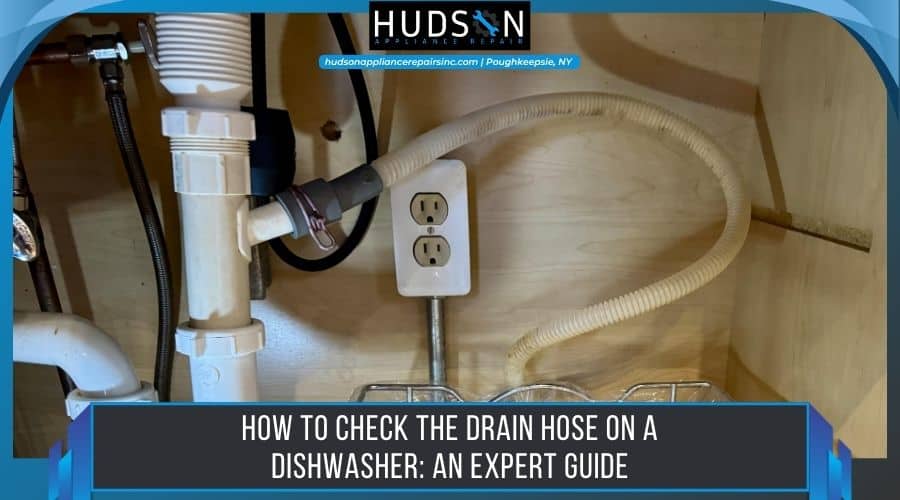
Finding a pool of dirty water at the bottom of your dishwasher usually means you have a simple clog rather than a broken machine. To clear it, you may need to disconnect the hose from the sink drain or the pump connection to look for trapped debris. Learning how to check the drain hose on a dishwasher can save you an expensive repair bill and get your kitchen running again in under an hour. In this guide, you will learn the exact steps to locate, inspect, and clear your dishwasher drain line safely and efficiently.
How Your Dishwasher Expels Wastewater
The drain hose is a flexible corrugated plastic tube that carries dirty greywater from the drain pump to your sink plumbing or garbage disposal. It relies primarily on the drain pump to move wastewater out of the machine, while proper hose routing helps maintain effective drainage. If the hose gets bent, clogged with food debris, or installed without proper backflow protection, water backs up into the tub instead of draining away.
| Variable/Symptom | Impact/Cause | Recommended Action |
| Standing Water | Kinked drain hose or clogged disposal inlet | Straighten the line and check the disposal knockout plug |
| Sink Gurgling | Missing a high loop or a countertop air gap | Reroute the hose to the highest point under the counter |
| Foul Odors | Food particles trapped in the hose ridges | Flush the hose with hot water and inspect it for trapped debris or grease buildup |
Step-by-Step Guide on How to Check the Drain Hose on a Dishwasher
Isolating a drainage blockage requires a systematic inspection from the sink connection down to the appliance pump. You can easily diagnose and clear the line by following these dishwasher troubleshooting steps in order:
- Turn Off Power and Water: Disconnect electrical power by unplugging the dishwasher or switching off the appropriate breaker, and close the water shutoff valve to ensure a safe working environment.
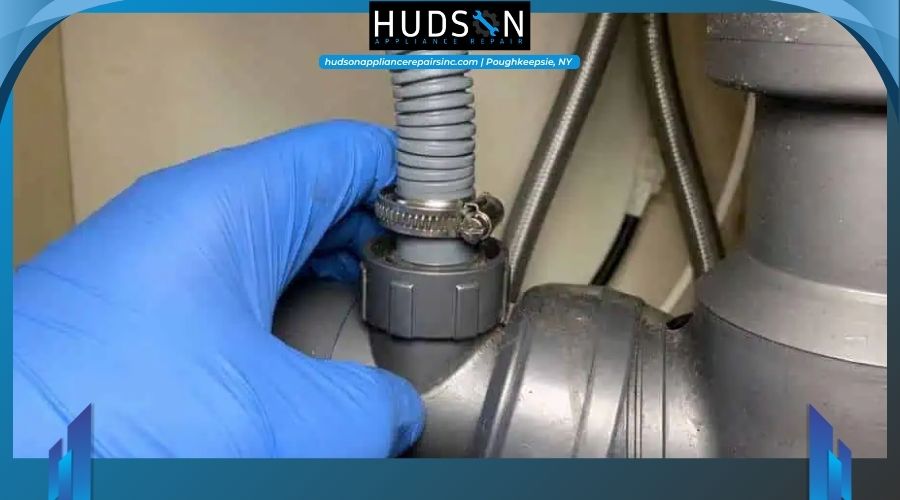
- Inspect the Under-Sink Joint: Loosen the hose clamp at the garbage disposal or sink tailpiece to look for trapped food debris or an unremoved disposal knockout plug.
- Clear the Countertop Air Gap: Remove the decorative silver cap on your sink deck to clean out any trapped seeds or paper labels from the internal bypass channels.
- Check for Cabinet Kinks: Slide the dishwasher out slightly to examine the corrugated line for sharp bends or flattening that blocks water flow.
- Disconnect the Pump End: Remove the bottom kickplate panel, release the spring clamp at the drain pump, and pull the hose free to inspect and flush it with water, removing any visible debris or blockages.
- Examine the Internal Check Valve: Inspect the small rubber flap located right at the pump outlet connection to make sure it is not warped or stuck shut.
Signs It Is Time to Call a Professional Dishwasher Repair Specialist
Some drainage problems go beyond a simple food block and require specialized tools or replacement parts. You need to hire an outside technician immediately if you encounter any of these advanced mechanical issues:
- Burnt-Out Drain Pump: The machine refuses to drain even though the hose is completely clear and the pump is receiving electrical power.
- Main Control Board Failure: The appliance skips the drain cycle entirely due to a faulty electronic relay inside the main control board.
- Structural Water Leaks: The drain line has cracked beneath the cabinet floor and threatens to rot your subflooring or grow mold.
- Corroded Electrical Wiring: The electrical leads connecting the wire harness to the drain assembly have shorted out or suffered water corrosion.
Secure Your Dishwasher Against Future Drainage Failures
Keeping your dishwasher line clear is an ongoing process that extends the overall lifespan of your appliance. By implementing a few basic habits, you prevent food debris and grease from solidifying inside the corrugated line again. Scrape your plates thoroughly before loading them, rinse the mesh sump filter once a month, and run your kitchen sink until the water is hot right before starting a wash cycle. Taking these simple steps protects your home from unexpected plumbing headaches and keeps your kitchen running smoothly. Restore flawless drainage. Connect with our home appliance repair technician to diagnose pump pressure, flush corrugated lines, and optimize your under-sink plumbing geometry today.
Hudson Appliance Repair is a full-service home appliance repair company serving the Poughkeepsie, NY area, specializing in comprehensive refrigerator, oven, dishwasher, and washer and dryer repair for local homeowners.
Frequently Asked Questions
Why is there standing dirty water in my dishwasher?
Standing water is typically caused by a clogged sink connection, a blocked mesh filter inside the tub, or a kinked drain hose behind the unit. If you recently installed a new garbage disposal, the installer may have forgotten to remove the internal plastic knockout plug from the dishwasher inlet.
How do I know if my dishwasher drain hose is clogged?
The most common indicators include a large pool of water left at the bottom of the tub after a cycle, water overflowing out of your countertop air gap, or loud gurgling noises in your kitchen sink while the dishwasher drains. Modern machines will also display a specific drainage error code on the control panel.
Where is the drain hose located on a standard dishwasher?
The hose attaches directly to the drain pump outlet underneath the dishwasher tub behind the lower front kickplate panel. From there, it routes along the floor or back wall of the appliance, exits out the side, and passes through a hole in your cabinetry to connect under your kitchen sink.
How do you disconnect a dishwasher drain line without spilling water?
You must place a shallow baking pan or a thick layer of absorbent towels directly beneath the hose joint before loosening any clamps. Keep an empty bucket right next to you so you can quickly tilt the disconnected end downward and catch the residual water before it reaches your floor.
What happens if the dishwasher drain hose doesn’t have a high loop?
Without a high loop or an air gap assembly, gravity causes dirty wastewater from your kitchen sink to siphon backward into the clean dishwasher basin. This lack of backflow protection may violate local plumbing code requirements, create foul odors, and risk contaminating your freshly washed dishes with unsanitary sink runoff.