
Are your dishes coming out dirty after a full wash cycle? You may need to test your dishwasher circulation pump before replacing parts or calling for service. This pump pushes water through the spray arms, so a weak or failed pump can leave food stuck to plates, glasses, and utensils.
In this article, you will learn how to check the pump safely, read multimeter results, spot blockages, and know when professional dishwasher repair makes more sense. Finding the exact source of a mechanical failure is often a better starting point than guessing based only on the signs of a faulty dishwasher sensor.
Why Is My Dishwasher Not Cleaning Properly
A failing circulation pump can stop water from reaching the spray arms with enough pressure to clean dishes properly. This is one of the most common reasons dishes come out dirty even after a full wash cycle.
Modern dishwashers built to ENERGY STAR dishwasher efficiency requirements use less water per cycle. Because of this, the wash motor must move water through the system with steady pressure. If the pump weakens, the spray arms may not spin correctly or rinse food off the dishes.
If you hear a loud humming noise but do not see water movement, the motor may be struggling. You can narrow down the cause by checking electrical continuity and inspecting the pump for physical blockages.
What Tools Do You Need to Test a Wash Motor
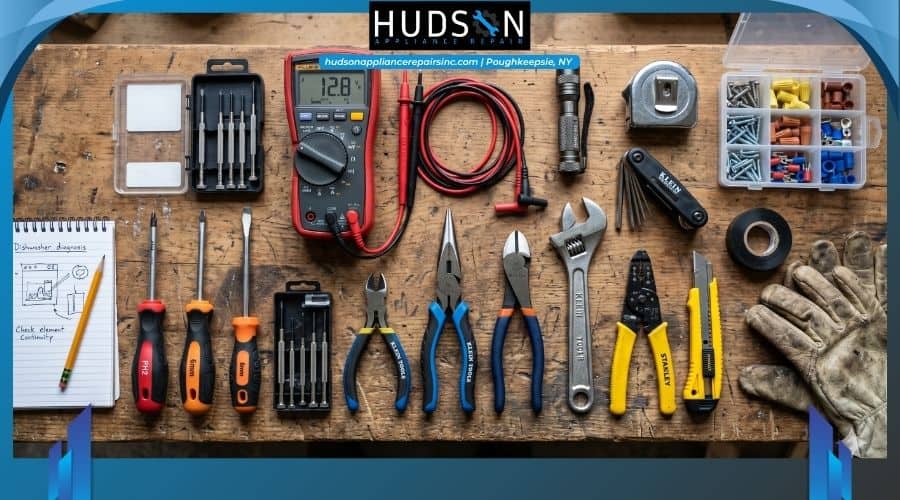
You need a few basic tools to test a dishwasher circulation pump safely. Having everything ready before you start helps you avoid damage to small parts and makes the repair process easier.
Gather these essential items before you begin your diagnostic work:
- A digital multimeter to measure voltage and electrical resistance accurately
- A standard screwdriver set to remove the lower access panel
- Needle-nose pliers to remove debris from the pump housing
- Dry towels to catch any leftover water from the supply line
- A non-contact voltage tester to confirm the circuit breaker is off
These tools help you check both the electrical and physical condition of the circulation pump. Once they are ready, you can safely access the lower part of the dishwasher.
How Do You Safely Access the Dishwasher Circulation Pump
Safety should always come first during appliance repair. You must reduce the risk of electric shock and water damage before touching any internal parts.
Always turn off the dedicated circuit breaker first and follow OSHA electrical safety guidelines when working around electrical components. Do not test live voltage unless you have proper training, since dishwasher wiring can cause serious injury.
Next, turn off the water inlet valve under your kitchen sink to prevent leaks. Remove the screws holding the lower access panel in place. Look under the metal frame for the sump basin where the circulation pump attaches. Carefully unplug the wiring harness that connects the motor to the main control board.
How Do You Test the Circulation Pump with a Multimeter
Testing electrical continuity helps you determine whether the motor windings are still intact. Set your multimeter to the lowest ohms setting, then touch the probes to the metal terminals on the pump motor.
A healthy pump often shows a reading between 10 and 30 ohms, but the correct range can vary by brand and model. Check your dishwasher service manual when possible.
Use this simple chart to understand what your digital display may mean:
| Multimeter Display | Motor Condition | Required Action |
| 10 to 30 ohms | Healthy copper windings | Inspect the impeller for physical blockages |
| Zero ohms | Short-circuited motor | Replace the entire circulation pump assembly |
| Infinite symbol | Broken internal wire | Buy and install a new wash motor |
A good electrical reading does not always indicate that the pump is working correctly. If the motor tests within range, the next step is checking the impeller and pump housing for debris.
Could a Physical Blockage Be the Problem

Yes, a physical blockage can stop the dishwasher circulation pump even when the electrical system works properly. Broken glass, seeds, labels, and hard food particles can jam the plastic impeller.
Dishwashers are designed to meet testing and performance standards set by groups such as the Association of Home Appliance Manufacturers, but they still require regular filter cleaning and basic care to prevent blockages.
Reach into the pump housing and try to spin the impeller by hand. It should move freely with slight magnetic resistance. If it feels stuck, use needle-nose pliers to remove visible debris without forcing the impeller blades.
After removing the blockage, reassemble the unit and run a short test cycle. If water sprays normally again, the issue was likely a jammed impeller rather than a dead motor.
When Should You Call a Local Appliance Repair Professional
You should call a local appliance repair professional if the pump tests correctly, but the dishwasher still does not spray water. In that case, the issue may involve the control board, wiring, door switch, or another internal component.
You should also stop the repair if you smell burning, see melted wires, notice water near electrical parts, or feel unsure about the test results. Guessing can lead to more damage and higher repair costs.
Hudson Appliance Repair is a full-service home appliance repair company serving the Poughkeepsie, NY area, specializing in comprehensive refrigerator, oven, dishwasher, and washer and dryer repair for local homeowners. Contact us today when you need trusted dishwasher repair done safely and efficiently.
Frequently Asked Questions
Is a licensed technician required for appliance repairs?
Homeowners can legally fix many of their own appliances. However, property managers should check local building codes before doing electrical work on rental units to avoid safety issues and liability.
What are the signs of a failing wash motor?
A failing wash motor often makes a loud humming sound without spraying water. Dirty dishes on the top rack, weak spray arm movement, and leftover food after a full cycle can also point to a circulation problem.
Can a jammed food particle mimic a dead motor?
Yes, a hard food particle, broken glass, or small object can lock the impeller blades in place. Removing the blockage may restore normal water movement without replacing the circulation pump.
What multimeter setting measures motor health?
Set your multimeter to the lowest ohms setting. Many healthy circulation pumps show resistance in the 10 to 30 ohm range, but the correct reading can vary by dishwasher model.
Is fixing a wash motor cheaper than replacing the dishwasher?
Replacing a circulation pump usually costs less than buying a new dishwasher. Proper testing helps confirm the problem first, so you do not replace parts that still work.